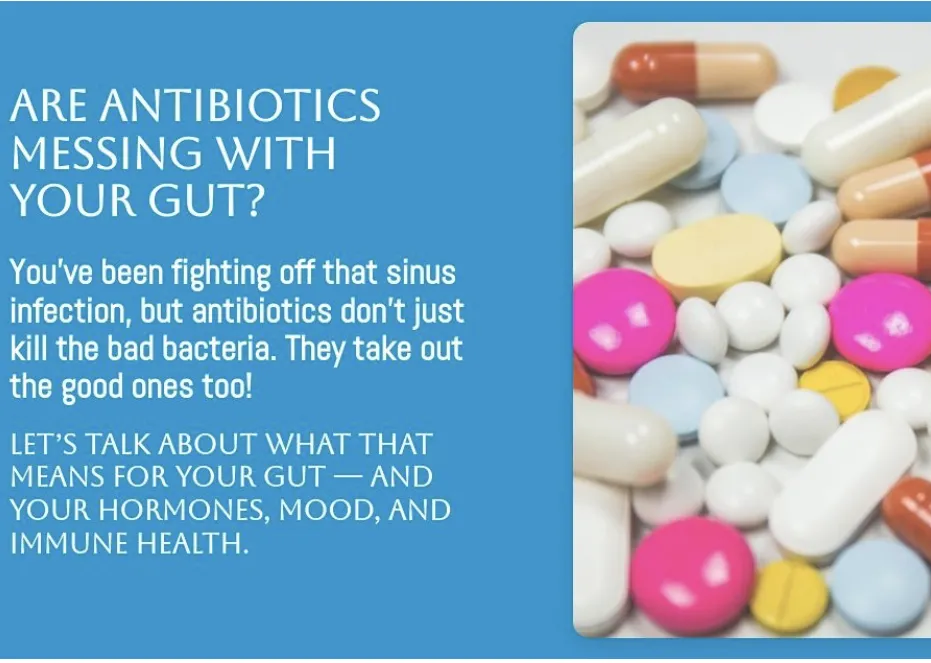
Antibiotics and Gut Health
Do you want a probiotic with that prescription?
Have You Been on an Antibiotic Lately? Here’s What You Need to Know
With cough, cold, and flu season in full swing, pharmacies everywhere are dispensing antibiotics like they’re candy on Halloween.
While these medications are essential for fighting bacterial infections like sinusitis or bronchitis, there’s something most people don’t think about when they pick up their prescription: what those antibiotics are doing to their gut.
Let’s break it down.
Antibiotics are amazing at killing off the bacteria causing your infection (thank you, science!).
BUT — and this is a big but — they aren’t selective.
They’ll take out the good bacteria right along with the bad, leaving your gut microbiome feeling like a ghost town.
Here’s why that matters:
Why Your Gut Bugs Are a Big Deal

THE GUT IS THE RINGMASTER OF YOUR HEALTH
Your gut is basically the ringmaster of your entire body. Hormones? Immunity? Digestion? Yep—your gut’s got a hand in all of it. In fact:
70–80% of your immune system lives in your gut. Antibiotics may help fight your sinus infection, but they can leave your immune system in a weakened state if your gut bacteria are out of whack.
Good bacteria = serotonin production. Did you know that most of your serotonin (that feel-good brain chemical) is made in your gut? When antibiotics disrupt your gut balance, serotonin production can drop, leading to feelings of anxiety or depression.
Gut health = hormone health. Your microbiome helps regulate estrogen and other hormones. When the balance tips, you might notice bloating, mood swings, or even breakouts.
The Antibiotic Aftermath: What to Watch For
If you’ve recently been on an antibiotic, you might experience:
Bloating or changes in digestion
Weakened immunity, leaving you vulnerable to another illness
Mood swings or feelings of anxiety
Skin issues, like breakouts or dullness
This happens because antibiotics kill off those beneficial bacteria that keep your gut functioning like a well-oiled machine. But don’t worry—you can absolutely bounce back with a little TLC for your gut.

How to Heal Your Gut After Antibiotics
Probiotics to the Rescue
Load up on fermented foods like yogurt, sauerkraut, and kimchi. Or, consider a high-quality probiotic supplement with diverse strains to replenish your microbiome.
Prebiotics Are Key
Think of prebiotics as food for your good gut bugs. Add fiber-rich foods like garlic, onions, bananas, and asparagus to your plate.
Digestive Enzymes Can Help
Antibiotics can disrupt your digestion, making it harder to break down food properly. Digestive enzymes can give your system a boost by helping to break down proteins, fats, and carbs more efficiently.

Get quality supplements here: www.hormonalpharmacist.world
Hydrate Like a Boss
Water helps flush out toxins and keeps your digestion moving.
Ditch the Junk
Processed foods and sugar feed the bad bacteria. Stick to whole, nutrient-dense meals.
Consider Gut-Supportive Supplements
Look for options like L-glutamine or collagen to help repair the gut lining.

Take the Root-Cause Approach
At the end of the day, your gut is the gateway to your overall health.
Healing from a sinus infection only to wind up feeling bloated, anxious, or run down isn’t the win you were hoping for. Take care of your microbiome, and it will take care of you.
So, the next time you’re handed a prescription for an antibiotic, don’t forget to think about your gut. Add some probiotics, eat those leafy greens, and give your gut the love it deserves. You’ll be feeling better in no time—from the inside out.

Have questions about how to heal your gut?
Send me an email—I’m ready to help!